
BOSCH Adventures · Field Notes
From the highveld to the Cape coast, geography is the key to planning realistic distances and richer days.
South Africa is more than safari
South Africa sits at the southern tip of the African continent, framed by the Atlantic Ocean in the west and the Indian Ocean in the east. In a comparatively compact area, desert, high plateau, subtropical coastline and alpine mountain country all meet.
The country brings together 13 climate zones, two oceans and landscapes that barely fit on a map. From the dry Kalahari in the west to the subtropical savannah in the east, this variety helps explain the range of wildlife and plant life.
The Cape Floral Kingdom
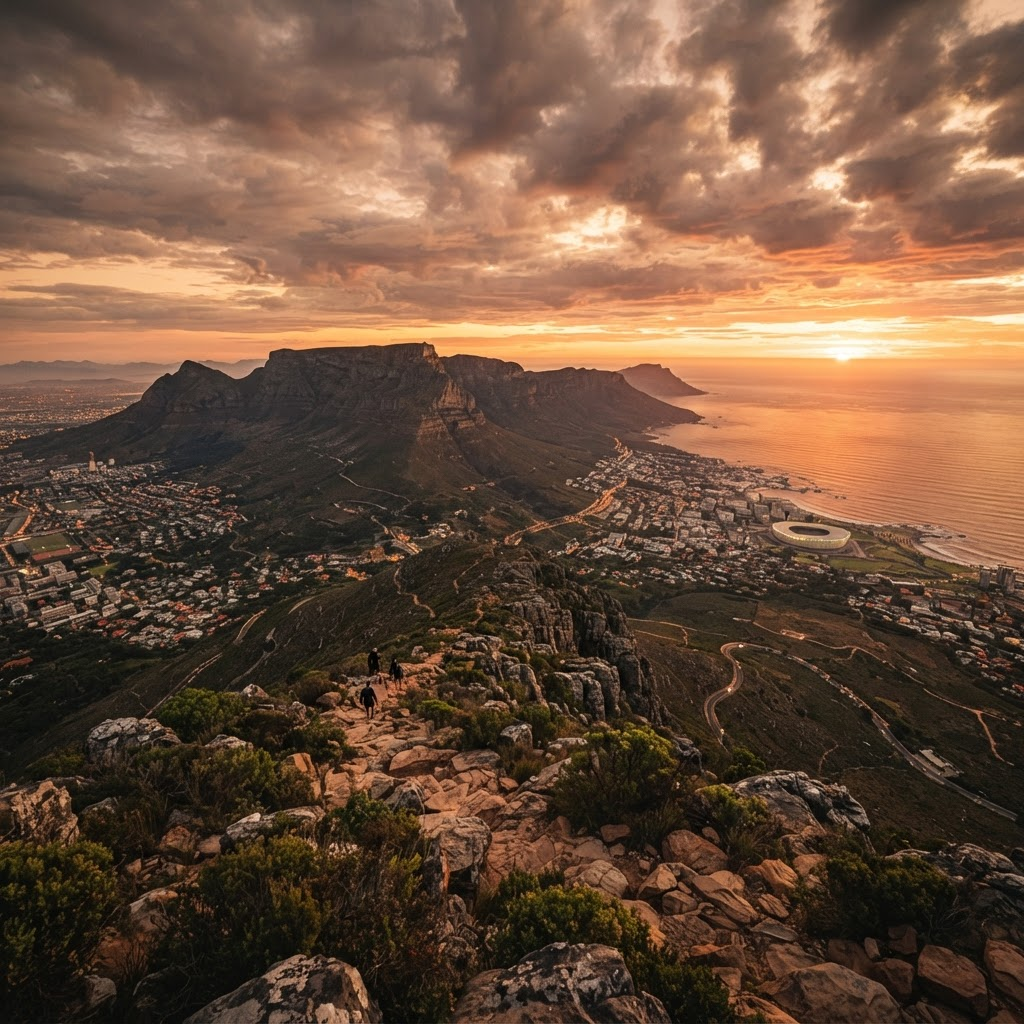
Around Cape Town lies the smallest but most species-rich of the world’s six floral kingdoms. About 9,000 plant species grow here, many found only in this region. Table Mountain alone is home to more plant species than the whole of Great Britain.
Where two oceans meet
The warm Agulhas Current shapes the east coast, while the cold, nutrient-rich Benguela Current influences the Atlantic in the west. The result is a varied coastline, productive marine ecosystems and habitats for penguins and whales.
From the Drakensberg to Kruger
The Great Escarpment rises behind the coastal plains. In the Drakensberg, peaks reach more than 3,400 metres; farther north, the high plateau opens into the Lowveld and Kruger National Park, while the semi-desert Karoo stretches across the interior.
South Africa is not one landscape. It is a journey through millions of years of geological history—from dry deserts to subtropical coasts.
Plan your journey with local insight.
Tell us where you would like to go and what matters most. We’ll help you shape a realistic route around the season, your pace and the experiences you value.
Plan your journey