
BOSCH Adventures · Field Notes
From choosing a reserve to setting a realistic pace, start with the decisions that shape the whole experience.
04:45 · Before first light and the right clothes
The alarm rings long before the African sun reaches the horizon. It is still dark outside—and surprisingly cold. Anyone who assumes that Africa means shorts all day may shiver through the first morning drive. The secret is layering: the wind on the vehicle feels icy in the morning, while by 11 a.m. the temperature can climb above 30°C. Wear a T-shirt, a light fleece and a windproof jacket that is easy to take off.
Three colour rules in the bush: choose olive, beige and khaki to blend into the surroundings; avoid white and neon colours, which stand out—especially when getting out at a lookout or on a walking safari; and avoid dark blue or black in places such as Botswana’s Chobe National Park, where tsetse flies are attracted to dark colours and can bite through denim.
05:30 · The gate opens and the bush wakes up
We set off as soon as the gate opens. This is where many first-time visitors make the same mistake: driving too fast, afraid of missing something. We do the opposite for the first few minutes—arrive, let our senses adjust and lower the windows. The cool morning air smells of wild sage, dry grass and earth.
Before you see an animal, you hear the bush: the metallic calls of francolins, the cooing of doves and—when we switch off the engine briefly at a waterhole—the eerie, throaty “whooo-up” of a spotted hyena. Sometimes you can even feel a deep vibration in your chest: a lion marking its territory from as far as eight kilometres away.
06:15 · Golden light, a hunt and the vehicle-silhouette rule
Then everything happens at once. The sun rises red over the acacias. We round a bend at a walking pace—no more than 20–30 km/h—and the bushes beside us seem to explode: a herd of impalas leaps across the sandy track. Just two seconds later, a pack of African wild dogs follows, among the continent’s most successful hunters.
Every day writes its own script. A pride of lions may stroll across the still-cool road with full bellies; a leopard may flow down from a marula tree to catch a scrub hare in the tall grass.
Safety check: never lean out of the vehicle to photograph a lion or leopard. Predators may perceive the vehicle as one large object; a person leaning out creates a distinct human outline that can be interpreted as prey or a threat. Keep your body inside the vehicle and follow your guide’s instructions at all times.
08:30 · A coffee break above the savannah
After three adrenaline-filled hours, we head for a designated lookout or a high riverbank. We take out the flask, pour hot coffee and lean against the bonnet. Below us, the African savannah stretches into the distance. There is no phone signal, no traffic noise—only the warm wind. In this stillness, the morning’s impressions begin to settle.
09:45 · The return drive and why a calf can mean real danger
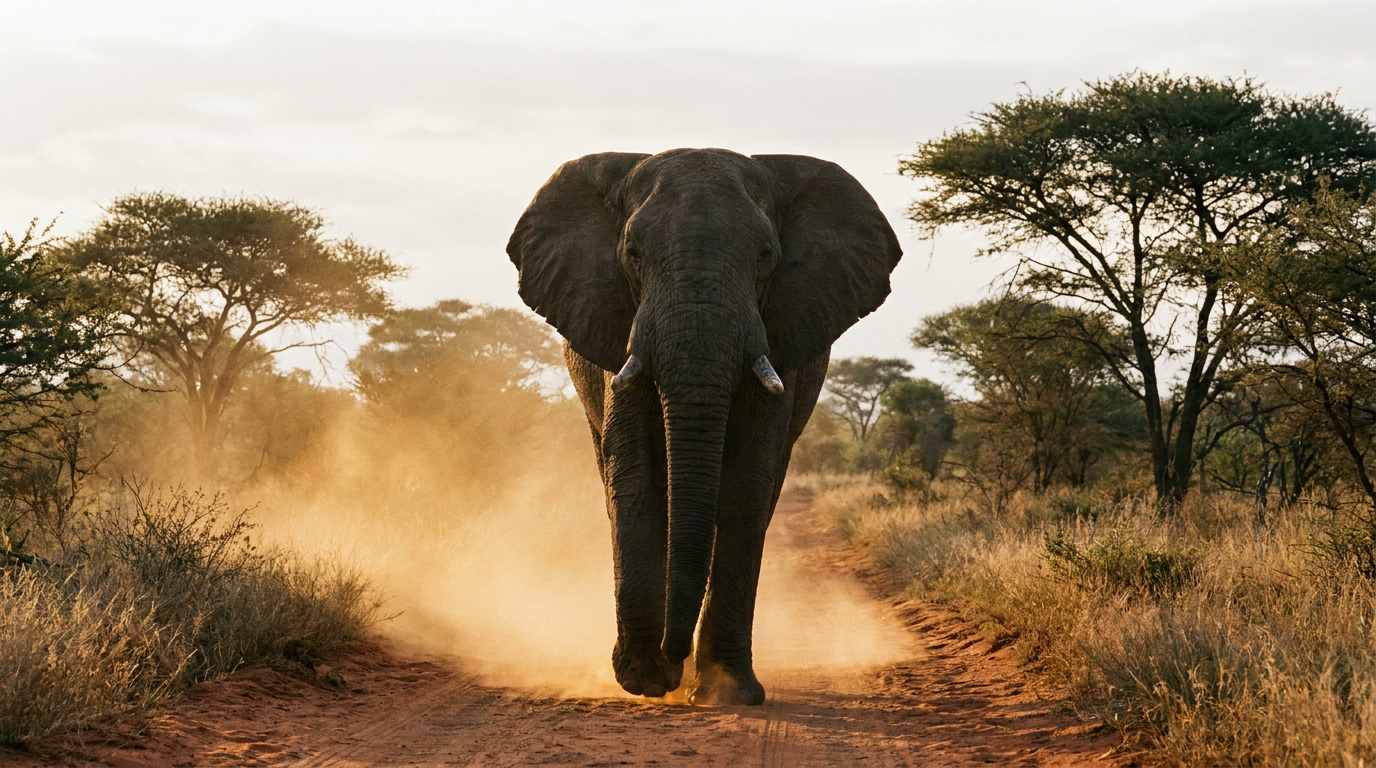
On the way back to camp, a large elephant herd was feeding close to the road. A matriarch and her calf were grazing in the verge. We stopped at a respectful distance and kept the engine running. Suddenly the young calf became playful: ears flapping, it ran curiously toward our vehicle to test its limits.
It looked like a sweet photo opportunity, but as a guide my attention immediately went to the mother. She stopped feeding and fixed us with a wary stare. Then the exuberant calf circled behind our vehicle and crossed to the other side of the road. In a moment, we had inadvertently placed ourselves between mother and calf.
Safety check: we had broken the safe line between the mother and her calf. The elephant gave clear warning signs: ears spread forward, head raised, tail held stiffly out and a sharp trumpet cutting through the silence. The instruction from nature is unmistakable: retreat immediately, but calmly. Do not accelerate in panic; reverse carefully and restore a clear path between mother and calf. Respecting this behaviour helps prevent dangerous encounters and makes space for mutual respect.
Keep extra distance from hippos on land; never stand between a hippo and its escape route to deep water. Give old, solitary buffalo bulls—often called “dagga boys”—a wide berth. And give way to a bull elephant in musth: wait patiently and reverse if your guide instructs you to do so.
11:00–18:30 · Basecamp siesta and the magic of dusk
During the blazing midday heat, we do what the big cats do: enjoy a long breakfast, back up our photos and rest in the shade. In the late afternoon, when the light turns heavy and deep orange, we head out again. Hundreds of elephants may gather to bathe along the Chobe River, while lions in Kruger begin to stir for the night. At sunset, we return to the campfire with dusty faces and full memory cards.
Written by Benjamin · Head Guide at BOSCH Adventures
Ready for your own safari—safe, intense and away from the crowds? Explore our small-group journeys or talk with us about planning a self-drive tour.
Safari checklist
What to pack in your day bag
0 of 5 packed
Plan your journey with local insight.
Tell us where you would like to go and what matters most. We’ll help you shape a realistic route around the season, your pace and the experiences you value.
Plan your journey