
BOSCH Adventures · Field Notes
A thoughtful introduction to the context, communities and places that give a journey through South Africa its depth.
South Africa’s present and its long history
South Africa’s present, with all its economic and social tensions, cannot be understood without looking at the past. The country’s deep inequality is not accidental: it is the result of a process built systematically over centuries.
This guide moves from colonial settlement and apartheid through Nelson Mandela’s release and the transition to democracy, then considers challenges in the country today—and what this context means for visitors.
Colonisation and the curse of wealth
In 1652, the Dutch East India Company established a supply station at the Cape for ships travelling between Europe and Asia. The British took control of the Cape Colony in 1806. Neither the Dutch nor the British treated Khoisan and Bantu communities as equals; their interests centred on land and labour.
Two discoveries marked a turning point: diamonds on the Orange River in 1867 and gold on the Witwatersrand in 1886. South Africa quickly became one of the world’s most sought-after resource frontiers. British capital flowed into the country, and Cecil Rhodes built a De Beers diamond monopoly that shaped the global market for more than a century.
After the Anglo-Boer Wars, the Union of South Africa was founded in 1910. Its constitution gave no political rights to the roughly 80 per cent of residents who were Black. The 1913 Native Land Act then restricted Black South Africans to 7 per cent of the country’s land, largely in the least fertile areas. The architecture of segregation was in place long before 1948.
A timeline
1652 — The Dutch East India Company establishes a supply station at the Cape. 1806 — Britain takes control of the Cape Colony. 1867 — Diamonds are discovered on the Orange River. 1886 — The Witwatersrand gold rush begins and Johannesburg emerges.
1899–1902 — The Anglo-Boer Wars; around 28,000 Boer civilians die in British camps. 1910 — The Union of South Africa is founded without political rights for the Black majority. 1913 — The Native Land Act confines Black South Africans to 7 per cent of the land. 1948 — The National Party wins on an apartheid platform.
1960 — The Sharpeville massacre: 69 people are killed during a peaceful protest. 1976 — Schoolchildren in Soweto rise up against Afrikaans as a language of instruction. 1977 — Steve Biko dies in police custody. 1990 — F. W. de Klerk lifts the ANC ban and Nelson Mandela is released after 27 years in prison. 1994 — The first democratic elections are held on 27 April; Mandela becomes president. 2010 — South Africa hosts the FIFA World Cup.
1948: the system of apartheid
The system that would define the country acquired its name in 1948, when the National Party won on a platform of “apartheid”—Afrikaans for “separateness.” What followed was one of the most comprehensive systems of state-enforced racial segregation ever created.
The Population Registration Act assigned every person an official racial classification. The Group Areas Act forcibly relocated hundreds of thousands of people into segregated residential zones. The Bantu Education Act imposed a deliberately inferior curriculum on Black children. Under the pass laws, people could be arrested immediately for not carrying identity documents.
Hendrik Verwoerd, architect of the Bantu Education Act, openly argued that there was no place for Bantu people in European society above certain forms of labour.
Resistance and economic calculation
On 21 March 1960, police opened fire on a peaceful protest against the pass laws in Sharpeville and killed 69 people, most of them shot in the back. On 16 June 1976, schoolchildren in Soweto marched against Afrikaans as a language of instruction. The image of 12-year-old Hector Pieterson, who was shot dead, travelled around the world. Steve Biko, founder of the Black Consciousness Movement, was beaten to death in police custody in 1977.
There was also a clear economic foundation to apartheid: in the 1970s, Black mineworkers earned only about 18 per cent of the wages paid to their white colleagues for the same work. The wage gap was not a side effect; it was the system itself.
Nelson Mandela expressed his ideal during the 1964 Rivonia Trial: “I have cherished the ideal of a democratic and free society in which all persons live together in harmony and with equal opportunities.”
The transition—and its limits
By the late 1980s, South Africa was stagnating under international sanctions, domestic resistance and the enormous costs of the police state. On 2 February 1990, F. W. de Klerk lifted the ban on the ANC and announced Nelson Mandela’s release. After four difficult years of negotiations, the first democratic elections took place on 27 April 1994—a transition without civil war and one of the great political achievements of the twentieth century.
In 1996, the government adopted a market-oriented economic programme known as GEAR: fiscal discipline, low inflation and opening the economy to global capital. It worked in the short term, but did little to change the distribution of wealth. The Black majority gained political freedom but little economic participation; that gap continues to shape the country.
From optimism to disillusionment
In 1994, the world looked at what seemed like a miracle: vast natural resources, a diversified economy and a new Black middle class. Some townships, including Soweto, developed into vibrant suburbs, and the 2010 World Cup showed a confident country standing alongside industrialised nations.
When the spotlight faded, it became clear that many structural problems had only been obscured. South Africa has since fallen behind in several measurable areas, even as other countries on the continent have made progress.
Challenges in daily life
Electricity: a government report warned of shortages as early as 1998, but new power stations arrived too late. Load shedding followed, at times involving planned outages of up to 12 hours a day. A former Eskom chief executive who left the country after a poisoning attack said corruption had cost the utility around US$52 million a month at one point.
Water and health: in 2018, Cape Town came close to “Day Zero,” when the city’s taps might have run dry. Near Pretoria, people died of cholera—a disease that functioning sanitation infrastructure should have made preventable.
Logistics: the state freight operator Transnet now moves around a quarter fewer goods than it did in 2015, a significant drag on a country that relies on resource exports.
Safety and justice: the murder rate is approaching historic highs, and only about one in five murders reaches court.
A downward spiral and a parallel state
The problems reinforce each other. When power fails, copper-cable theft becomes easier; the grid deteriorates further; repairs cost more; businesses lose money; and the state collects less tax to fund policing and infrastructure.
Those who can afford it respond by withdrawing from public life or emigrating. The private security industry now employs more people than the police and armed forces combined. In so-called City Improvement Districts, private companies patrol, repair potholes and collect rubbish. Solar installations are booming. At the same time, many skilled workers are moving to Australia or the United Kingdom, taking with them expertise the country urgently needs.
And yet South Africa still has a robust economy, enormous resources and a vocal, engaged civil society. The window to turn things around has narrowed, but it remains open.
What this means for your journey
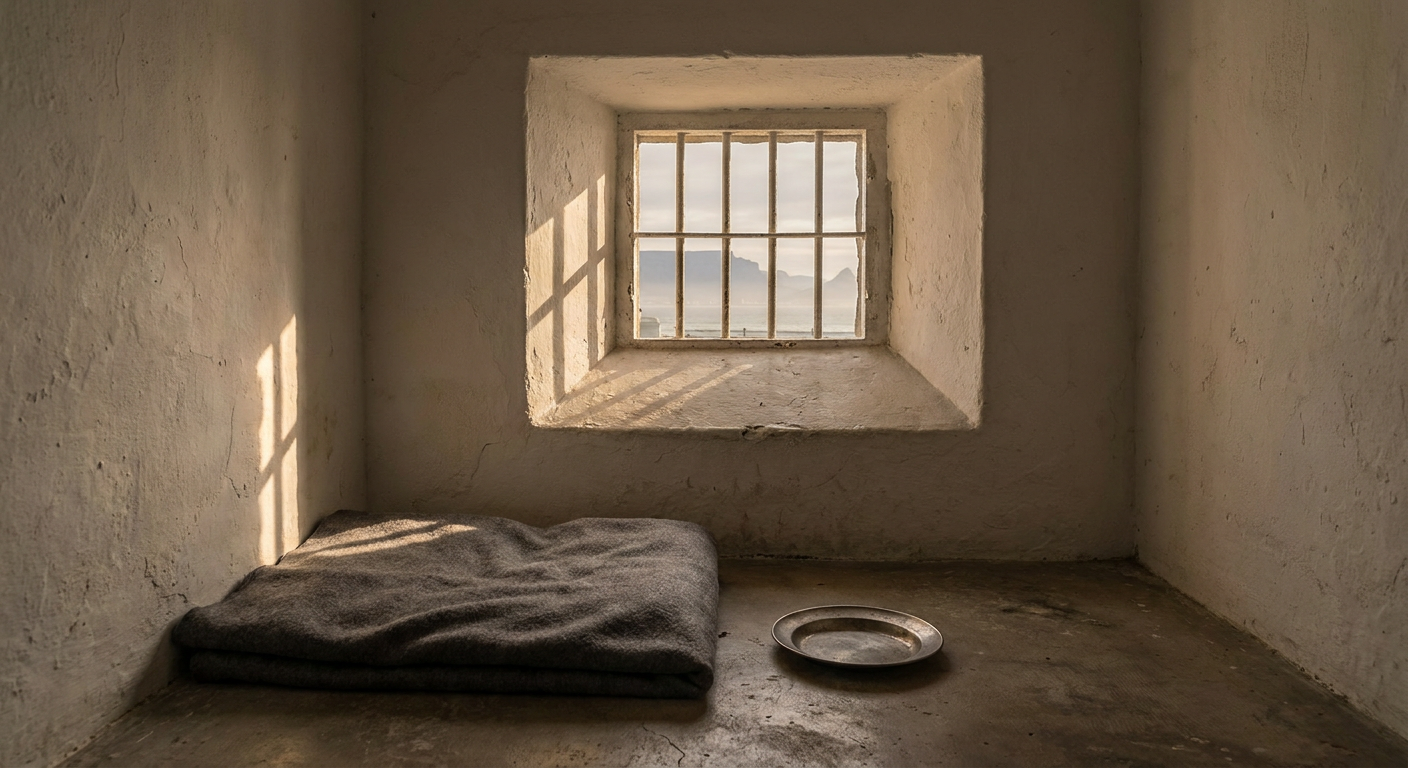
Experience history where it happened: Robben Island, the Apartheid Museum in Johannesburg, the Hector Pieterson Memorial in Soweto and Bo-Kaap in Cape Town make this history tangible.
Choose local guides. Visit townships with people from the community, respectfully and never as if the neighbourhood were a backdrop. Support locally owned family lodges, markets and regional guides so your spending remains in the communities that need it.
Travel prepared: accommodation with backup power, driving routes in daylight and current safety advice are all part of planning a trip. Learn from museums and memorials, and approach the country’s difficult history with care.
Plan your journey with local insight.
Tell us where you would like to go and what matters most. We’ll help you shape a realistic route around the season, your pace and the experiences you value.
Plan your journey